
Motorcycle crashes often happen in seconds, but the effects can shape a rider’s health, finances, and legal options for months or years. Because riders have far less physical protection than occupants of passenger vehicles, even a seemingly minor collision can lead to serious injuries, disputed fault, and complicated insurance negotiations.
Understanding why motorcycle accidents happen is important for more than road safety. The cause of a crash can directly affect an injury claim, including who may be held liable, what evidence is needed, and how insurers evaluate compensation for medical bills, lost income, pain, and long-term limitations.
Why the Cause of a Motorcycle Crash Matters in an Injury Claim
The cause of a motorcycle accident is often the starting point for determining legal responsibility. In many injury claims, the injured rider must show that another party acted negligently and that this negligence caused the crash. Negligence may involve a driver failing to yield, speeding, following too closely, driving distracted, or violating another traffic safety rule.
Insurance companies closely examine accident causes because fault affects whether a claim is paid and how much compensation may be available. If the evidence clearly shows that a driver caused the crash, the rider’s claim may be stronger. If there are questions about the rider’s speed, lane position, visibility, or helmet use, insurers may try to reduce the value of the claim or shift part of the blame to the motorcyclist.
Evidence That Helps Establish What Happened
Strong evidence can make a significant difference in a motorcycle injury claim. Police reports, witness statements, traffic camera footage, dashcam video, vehicle damage, skid marks, road debris, and photographs from the scene may all help explain how the collision occurred. Medical records are also important because they connect the accident to the injuries being claimed.
In more serious cases, accident reconstruction experts may be used to analyze vehicle speeds, impact angles, braking distances, and points of collision. This can be especially helpful when the driver and rider give conflicting accounts or when the insurance company argues that the motorcyclist was partially responsible.
Driver Negligence as a Leading Factor
Many motorcycle accidents are caused by negligent drivers who fail to notice riders or misjudge their speed and distance. Motorcycles are smaller than cars and trucks, which can make them harder to see in mirrors, intersections, and blind spots. However, drivers still have a duty to look carefully, obey traffic laws, and share the road safely.
When a driver’s careless behavior causes a crash, the injured motorcyclist may have a claim for damages. These damages can include emergency treatment, surgery, rehabilitation, medication, lost wages, reduced earning capacity, property damage, and non-economic harm such as pain, emotional distress, and loss of enjoyment of life.
Left-Turn Collisions
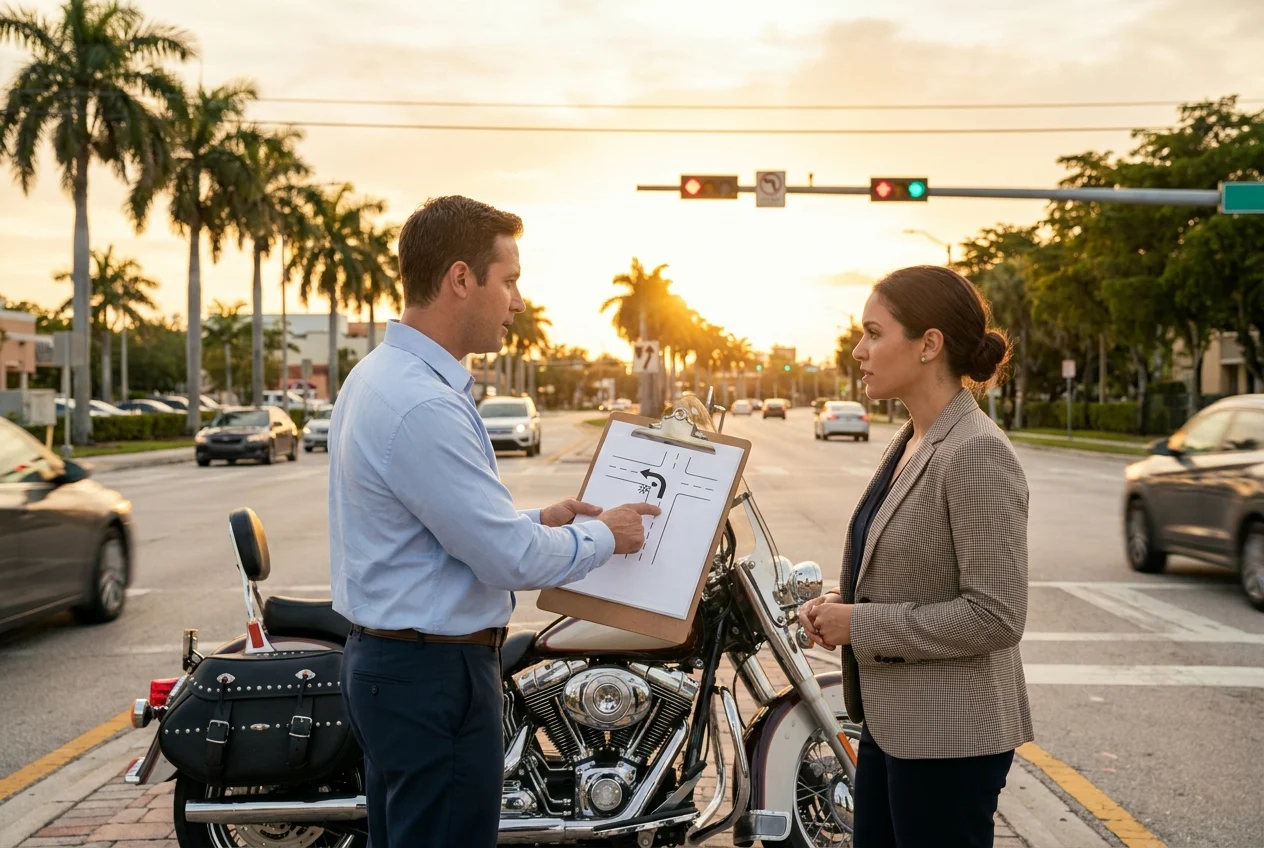
Left-turn collisions are among the most common and dangerous scenarios for motorcyclists. These crashes often happen when a driver turns left at an intersection or into a driveway while failing to yield to an oncoming motorcycle. The driver may claim that they did not see the rider, but failing to see an approaching motorcycle does not automatically excuse unsafe driving.
In an injury claim, left-turn accidents often focus on right of way, traffic signals, vehicle speed, sight lines, and the timing of the turn. If the motorcyclist had the right of way and was traveling lawfully, the turning driver may be held liable for the resulting injuries.
Distracted Driving
Distracted driving is another major cause of motorcycle crashes. A driver who is texting, using a navigation system, eating, adjusting controls, or looking away from the road may fail to recognize a motorcycle until it is too late. Even a brief distraction can be enough to cause a rear-end crash, unsafe lane change, or intersection collision.
Proving distraction may require more than a driver’s admission. Phone records, witness observations, in-vehicle data, surveillance footage, and the timing of the crash can all become relevant. When evidence shows that distraction contributed to the collision, it can strengthen the rider’s claim and support the argument that the driver failed to use reasonable care.
Unsafe Lane Changes and Blind Spot Accidents
Motorcycles can be especially vulnerable when drivers change lanes without checking mirrors and blind spots. A rider may be traveling lawfully in an adjacent lane when a car or truck suddenly moves over, forcing the motorcyclist to brake, swerve, or collide with the vehicle. These crashes are common on highways, multilane roads, and in heavy traffic where drivers make quick lane changes to avoid delays.
Injury claims involving unsafe lane changes often depend on showing where each vehicle was positioned before impact. Damage patterns, scrape marks, debris location, helmet camera footage, dashcam video, and witness statements may help prove that the driver failed to keep a proper lookout or moved from the lane before it was safe. If the driver did not signal, drifted across lane markings, or admitted to not seeing the motorcycle, that evidence can be important in establishing fault.
Rear-End Collisions
Rear-end collisions can be devastating for motorcyclists because there is little protection between the rider and the striking vehicle. A driver who follows too closely, speeds, or fails to notice slowing traffic may hit a motorcycle from behind at a stoplight, in congestion, or during a sudden traffic slowdown. Even at lower speeds, the impact can throw a rider from the motorcycle and cause serious injuries.
These claims often focus on following distance, driver attention, speed, road conditions, and whether the rider’s brake lights were functioning. While rear drivers are often presumed to be responsible, insurers may still look for arguments that the motorcyclist stopped abruptly, had defective lights, or made an unexpected maneuver. Preserving the motorcycle, obtaining photographs, and documenting repair or inspection records can help address these defenses.
Speeding and Aggressive Driving
Speeding is a frequent factor in serious motorcycle accidents, whether it involves the driver of another vehicle, the motorcyclist, or both. Higher speeds reduce reaction time, increase stopping distance, and make collisions more severe.
When another driver was speeding or driving aggressively, the injured rider’s claim may include evidence from traffic citations, witness statements, crash scene measurements, vehicle event data, surveillance footage, and accident reconstruction analysis.

When the Motorcyclist Is Accused of Speeding
Insurance companies often scrutinize a rider’s speed after a motorcycle crash. Even when a driver clearly made an unsafe turn or lane change, the insurer may argue that the motorcyclist was traveling too fast to be seen or avoided.
Accusations of speeding should be evaluated carefully. A driver’s statement that a motorcycle “came out of nowhere” is not always reliable. Motorcycles can appear smaller and farther away than they actually are, which may cause drivers to misjudge distance.
Driving Under the Influence
Alcohol and drug impairment can play a major role in motorcycle accidents. Impaired drivers may drift between lanes, miss traffic signals, fail to yield, drive the wrong way, or react too slowly to avoid a motorcycle.
In an injury claim, evidence of impairment can strongly support negligence. Police reports, field sobriety tests, breath or blood test results, criminal charges, officer observations, and witness statements may all help establish that the driver was unsafe to operate a vehicle.
How Impairment Can Affect Damages
Impaired driving may affect more than fault. In some cases, it may also influence the types of damages available. Depending on state law and the facts of the crash, a rider may be able to pursue punitive damages when the at-fault driver’s conduct was especially reckless.
Even when punitive damages are not available, evidence of impairment can affect negotiations. Insurers may be more motivated to resolve a claim when the facts show highly dangerous conduct by their insured.

Road Hazards and Poor Road Conditions
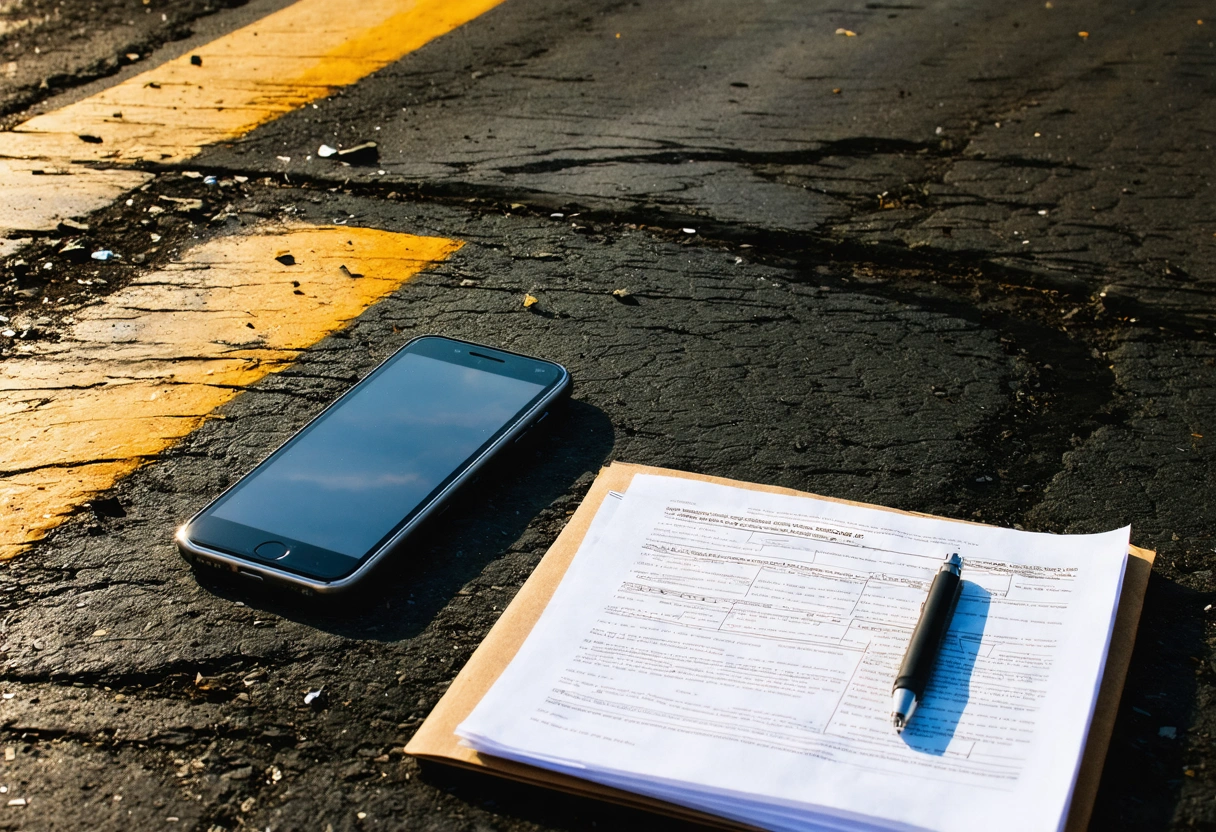
Hazards that may be minor inconveniences for larger vehicles can be extremely dangerous for motorcyclists. Potholes, loose gravel, uneven pavement, standing water, oil spills, missing warning signs, debris, poorly marked construction zones, and defective guardrails can all cause a rider to lose control.
Claims involving road hazards can be more complicated than claims against another driver. Potentially responsible parties may include a city, county, state agency, road maintenance contractor, construction company, property owner, or business that created the hazard.
Claims Against Government Entities
If a public road defect contributed to a motorcycle accident, special rules may apply. Claims against government entities often involve shorter notice deadlines, specific filing requirements, and limits on available damages.
Important evidence may include photographs of the hazard, measurements, maintenance records, prior complaints, inspection logs, construction plans, and reports of similar accidents in the same location.
Defective Motorcycle Parts and Equipment Failures
Some motorcycle crashes are caused by mechanical defects rather than driver behavior. Brake failure, tire blowouts, steering defects, throttle problems, lighting failures, and defective helmets or protective gear can contribute to an accident or make injuries worse.
A defective product claim may focus on whether the motorcycle or part was poorly designed, improperly manufactured, or sold without adequate warnings. Maintenance records, recall notices, expert inspections, and preservation of the motorcycle are especially important.

Negligent Repairs and Maintenance
Motorcycle accidents can also result from negligent service work. If a repair shop improperly installed brakes, failed to tighten critical components, used the wrong parts, or overlooked a dangerous issue during maintenance, the shop may share responsibility for the crash.
Riders can help protect their claims by keeping receipts, service records, warranty documents, and communications with repair providers. After a crash, the motorcycle should be preserved in its post-accident condition whenever possible so that experts can inspect the parts involved.
Dooring Accidents and Urban Traffic Hazards
Dooring accidents happen when a driver or passenger opens a vehicle door into the path of an approaching motorcyclist. These crashes are more common in cities, near curbside parking, rideshare pickup areas, delivery zones, and busy commercial streets.
Liability in dooring accidents may depend on whether the person opening the door checked for approaching traffic and whether the motorcyclist had a reasonable opportunity to avoid the hazard.
Insurers may argue that the rider was traveling too close to parked vehicles or moving too quickly for the conditions. However, drivers and passengers generally have a duty to make sure it is safe before opening a door into traffic.